

Italian is one of the richest and most fascinating languages in the world, vehicle of a unique literary, artistic and cultural tradition. To give up cultivating it means losing a precious heritage. Hence the importance of offering the new generations of our compatriots in Switzerland adequate tools to keep this heritage alive.
We talked about it with the new Director of the Education Office of the Italian Consulate General in Zurich, who tells us about opportunities and challenges of the Italian language in German-speaking Switzerland.
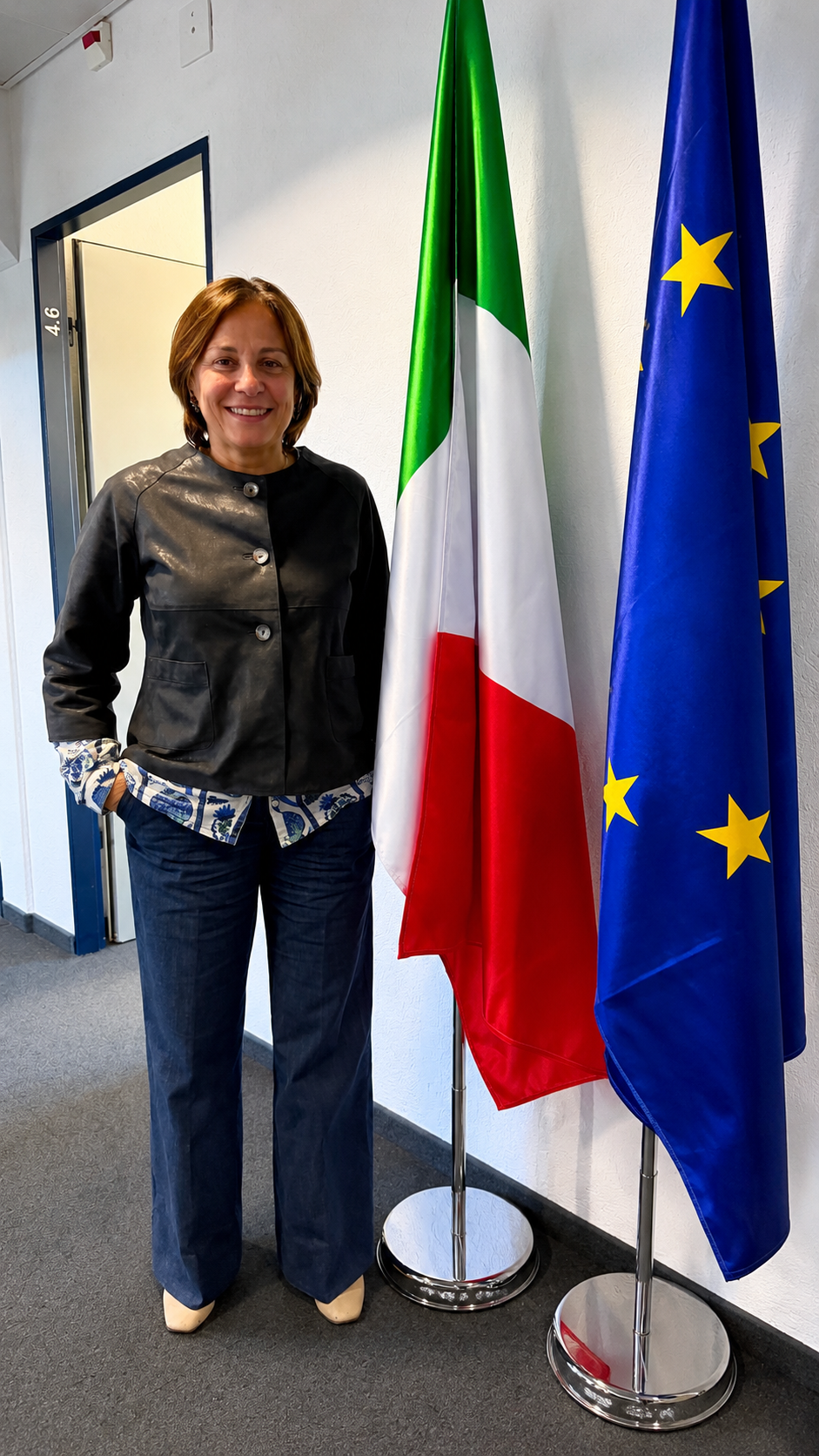
Italian in Switzerland is a precious but underused resource. This is the central message of the interview that Prof. Rosaria Genovese, for just over a year School Director of the Education Office of the Italian Consulate General in Zurich, gave to tuttoitalia.ch. A strategic role, hers, because she coordinates the offer of Italian Language and Culture that the Consulate organises in collaboration with the managing body C.A.S.L.I. in the Principality of Liechtenstein and in twelve Cantons of the Confederation: Glarus, Grisons, Lucerne, Nidwalden, Obwalden, St. Gallen, Schaffhausen, Schwyz, Thurgau, Uri, Zug and Zurich.
Prof. Genovese is on her first experience abroad. "First year, yes. First year abroad, let's say a year and a half," she says. And to the question of how she is finding it, she answers with sincerity: "Quite well. Switzerland still needs its time to get used to."
The first knot the Director addresses is that of perception. For many families, even Italian-speaking ones, Italian would not be a "spendable" language. "It is a big challenge because unfortunately Italian, compared to other languages such as English or Spanish, is not considered, in quotation marks, so important in the world of work, so many families privilege the study of other languages for their children."
Hence the main task: "It is up to us to make people understand the importance, on the contrary, of how much the Italian language can be enriching at the very level of the formation of the person." There is then a concrete cognitive advantage, especially for those who live in German-speaking Switzerland. "It can also help in the study of the German language, because, given how it is structured, since it derives from Latin, it has affinities in the grammar above all, naturally, not in the lexicon." A counterintuitive idea but supported by didactics: studying Italian grammar provides the logical categories useful also to orient oneself in the complex morphology of German.
And then there is the university perspective: "In Italy there are universities of excellence. It is important also to convey the idea that one can also study at an Italian university, because in the end the preparation that Italy gives is seen worldwide. Many researchers in all the most important universities have been trained in Italy. In addition to maintaining contact with the language of origin and enriching one's cultural baggage, it is also a study opportunity."
In the central part of the interview, Prof. Genovese enters the heart of pedagogy and contrasts the Italian model, which she defines as inclusive and which offers equal opportunities for all children, with the Swiss school system, more selective, in which access to the Gymnasium is subject to passing an entrance test, with an early determination of the future school path.
"A bilingual high school in Italian like the Vermigli, on the other hand, does not involve the entrance test and therefore represents a good opportunity to access a high school and consequently the University." The Italian model, continues the Director, is centred on the values proper to our Constitution, is inclusive, develops values such as tolerance, respect for other cultures, respect for the other, teaches a transferable study method. A forma mentis, in short, that prepares not only for university but for a multicultural society, where coexistence is the rule and not the exception.
From Canton Aargau, however, a worrying signal arrives. "In Aargau for example they have decided that they will no longer give the classrooms for free to the language and culture courses." The decision, the Director explains, will start from the next school year and currently concerns only Aargau: "From next year the managing bodies, in addition to the ministerial teachers, could have great difficulties in finding classrooms and in having them free of charge as happens today. And the schools can also refuse the granting of the classrooms."
The concrete fear is the contagion effect: "The managing bodies are very worried." The response? It could be to mobilise the families of all languages of origin. "Perhaps if there were a strong demand from families, who consider important the study of the language of origin, this tendency to reduce the Italian linguistic offer and that of other languages of origin in some Cantons of the Confederation could be curbed."
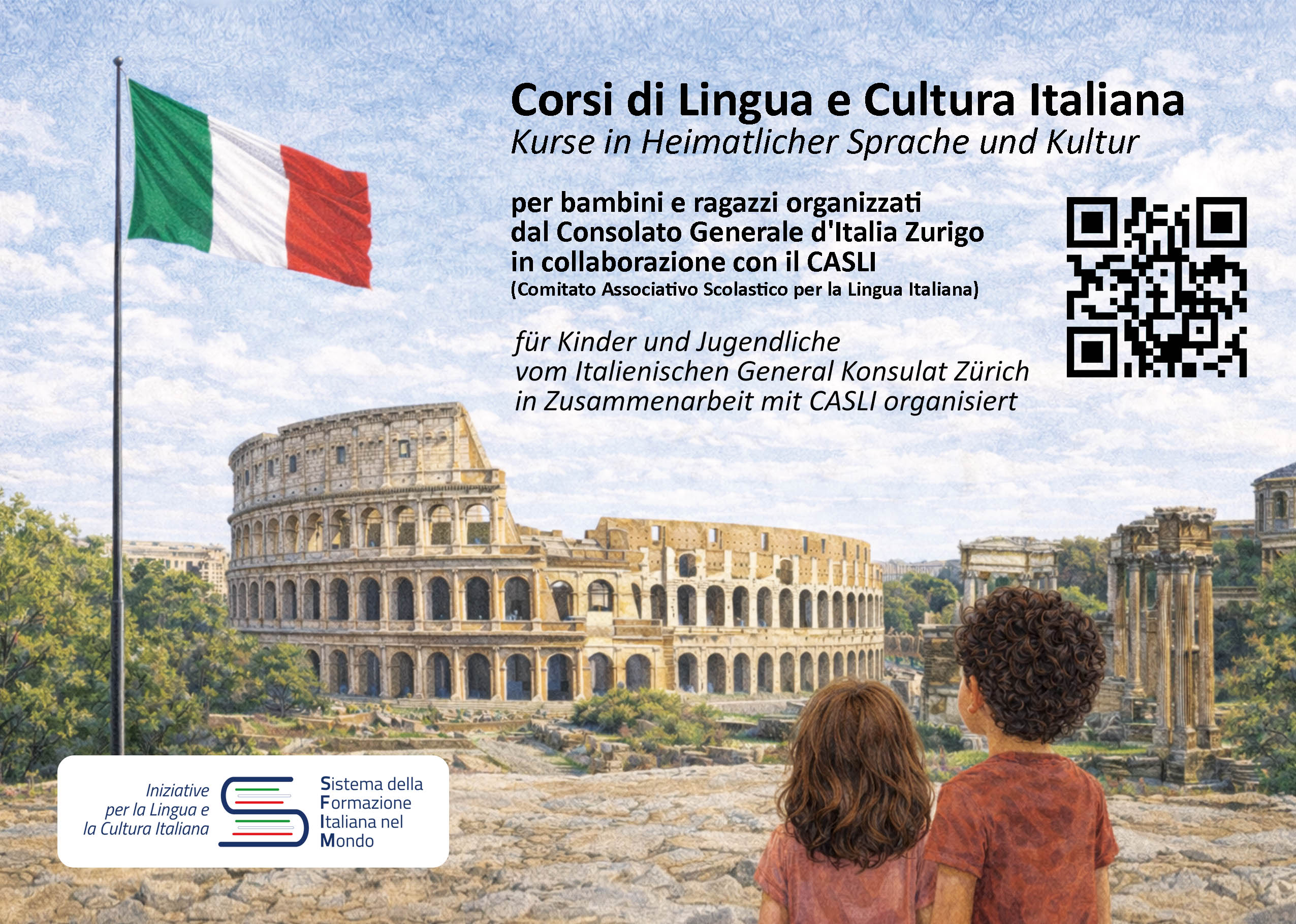
The courses are articulated on two levels, primary and secondary, and provide for precise access rules.
Primary level. Children who in the 2026/2027 school year will attend classes from 1st to 5th of Primary School can enrol. Pupils enrolled in the 2nd year of Kindergarten are also admitted with reserve: in these cases the course teacher, after an interview with the parents and possibly a couple of trial lessons, evaluates whether to accept the child based on the linguistic level, maturity and composition of the class group. Good news for families: primary level courses are also open to pupils who do not know Italian, a precious possibility for the children of mixed couples or for those who have lost contact with the language of origin.
Attention to Canton Zug: an exception applies, because attendance is only possible starting from the 2nd class of Primary School.
Secondary level. Girls and boys who attend the 6th class of Primary School and the classes from 1st to 3rd of Sekundarstufe I (the lower secondary school) can enrol. At this level, however, at least a basic knowledge of the Italian language is required: the middle courses presuppose that the pupil is able to follow more structured lessons.
One of the most important and least known pieces of information for families concerns the structure of the training offer.
The linguistic paths are articulated on the six levels of the Common European Framework of Reference for Languages (CEFR), from A1 to C2. This means that the child does not follow a generic "Italian course" but a progressive path, calibrated on his real starting level, according to the same standards used in universities and in European professional contexts. At the more advanced levels, students are prepared to take the CELI and PLIDA certification exams, the two main certifications of Italian as a foreign language recognised internationally. For a student who one day will want to apply to an Italian university or to a company that operates with Italy, it is a title that makes the difference.
The Italian language and culture courses represent a fundamental integration to the Swiss school system. A 360-degree educational investment, they are regulated at the cantonal level and are recognised by the educational authorities, which underline their value in the development of multilingualism and intercultural competences.
For those who wish to explore the offer of Italian Language and Culture Courses, it is possible to consult the dedicated page of the Education Office of the Italian Consulate General in Zurich and of the Managing Body CASLI.