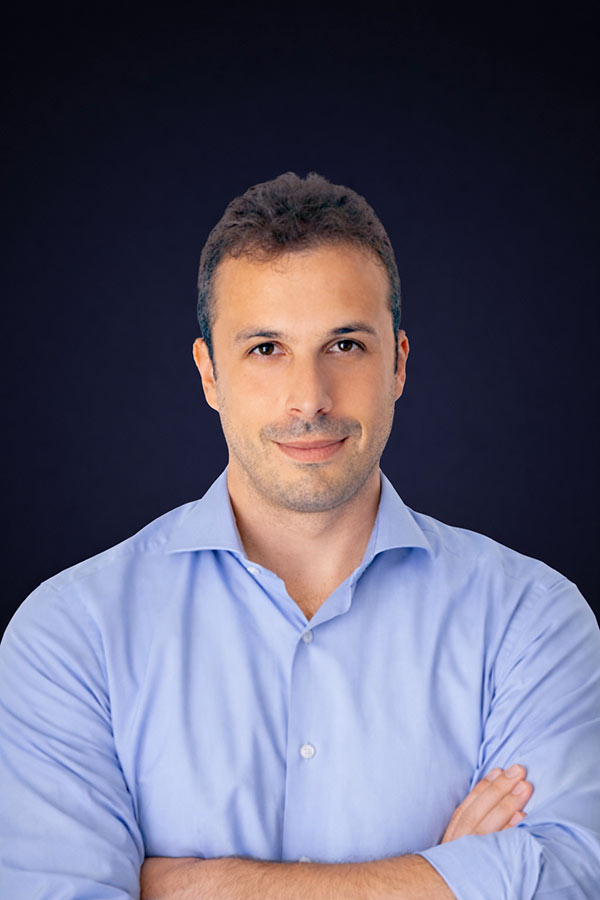




In a multilingual country like Switzerland, finding someone who listens in your mother tongue is not just a matter of convenience. For many it can represent the first step towards authentic and effective care. Emotions, memories and the most intimate experiences take shape in the language we grew up in, and when it comes to psychotherapy the possibility of expressing oneself without filters becomes fundamental. It is precisely from this awareness that MindSwiss was born, a Swiss organisation offering rigorous, recognised psychotherapy programmes that are also accessible online, with particular attention to the person's mother tongue. We met Davide Livio, psychotherapist and founder of the project, to better understand his vision, his approach and the challenges that characterise the world of mental health today. In the course of the interview, central themes emerge such as the importance of listening, the need for appropriate therapeutic paths and the tangible advantages of working with a professional who speaks Italian.
Is understanding a person in their mother tongue already a form of care? You work with many Italian-speaking patients in Switzerland. How much does language matter in the therapeutic relationship?
“It matters a great deal. Language is fundamental: emotions travel in the mother tongue. Working in psychotherapy through a translation is always limiting. Pain, joy and fear speak the language of the body; language is already a translation. Doing it in a language that is not your own risks losing a great many nuances and many possibilities. That is why at MindSwiss we offer therapy paths in the person's mother tongue.”
What led you to choose psychology as a profession?
“It was a passion I pursued in parallel with music. At the end of both courses of study it was clear to me that I felt much more at ease in the role of the psychotherapist. From then on it was a succession of projects in the public, private and legal fields, up to the genesis of MindSwiss, of which I am the founder.”

How would you describe your therapeutic approach?
“First of all: the encounter. When we are not well, the first need that emerges is to meet a human being who is willing to listen, without judgement. That is where the relationship is born, in the therapeutic setting. From a technical point of view I integrate hypnotic psychotherapy, EMDR and mindfulness practices, choosing each time the most suitable tool for the person and the clinical goal. The relationship is the basis on which everything works; I do not offer pre-packaged programmes. I work both in person and online.”
How do you manage to frame the needs of a potential patient when you meet or get to know them?
“At MindSwiss, the analysis of needs begins with a phone call or a video call. Together we assess whether the conditions for an online path exist, and I gather the useful information to understand who, among our staff, may be the most suitable person for that specific situation. In this first step we explore the problem, the goals, the resources. In the same context we give practical guidance on the LAMal insurance aspect and begin to collect the necessary documents.”
Once you know the patient and their needs, is it customary for you to treat them yourself or to refer them to a colleague?
“I work in a team. When a colleague's approach, specialisation or availability proves more suitable, I accompany the transition in a transparent way, always in Italian and always towards professionals licensed in Switzerland. The philosophy of MindSwiss is based precisely on this principle: offering the person a team of federally recognised psychotherapists, from whom to identify the most suitable professional according to their specific needs. Today we are seven therapists, with different skills and active in several languages. We work mainly in Italian, but the team also includes native speakers of German, French and Spanish. Our team is constantly growing.”
What are the topics you deal with most often and in what field do you operate?
“In my role as a psychotherapist at MindSwiss and at ClinicaPsiche I deal most frequently with mood disorders, anxiety and panic disorders, PTSD trauma and eating disorders. I work with adults and couples, in person and online.”
How did the idea of MindSwiss come about and what do you like about working in this context?
“I am the founder and part of the MindSwiss team: a group of psychologists and psychotherapists licensed in Switzerland, with therapy paths reimbursable through LAMal if prescribed. The idea came from observing how many people in German- and French-speaking Switzerland struggle to find therapists who speak Italian. Many turn to foreign services which, however, have different quality standards and are not reimbursable through LAMal. MindSwiss was created to combine Swiss quality and work in the mother tongue.”

In your work you also often address the risks linked to “fast psychology”: what do you mean?
“I am referring to poorly structured paths, not recognised or provided by barely verifiable providers. In Switzerland, psychotherapy follows high standards: postgraduate training, personal therapy, supervision, years of practice and constant updating. MindSwiss puts these standards at the centre. LAMal requires effective and economical services; our way of working is oriented towards these values, which I also consider to be the basis of professional ethics. The risks of fast psychology are not just wasted time or money: there is a concrete risk of prolonging suffering or creating emotional and relational damage.”
What challenges do you see in the coming years for psychotherapy in Switzerland and how does MindSwiss fit into this scenario?
“The main challenges concern timely access to recognised therapeutic paths and the guarantee of consistent quality throughout the country. Another central theme is the protection of the mother tongue in online services and the ability to effectively integrate remote sessions with in-person ones when necessary. Throughout Switzerland, many psychotherapists struggle to reduce waiting lists, while the demand for psychological support continues to grow. I do not believe the solution is simply to increase the number of professionals, but rather to optimise the way they work. At MindSwiss we are committed precisely in this direction: improving the appropriateness and effectiveness of therapy paths, making therapy faster, more useful and more sustainable. Looking to the future, we want to continue growing as a team while keeping the focus on Swiss quality, on the mother tongue and on rigorous clinical work. The goal is to expand the team's skills without losing coherence and to reach the territory in an ever more direct way.”
More information
MindSwiss SA
Via Stefano Franscini 10, Mendrisio 6850
tel. +41 0 91 252 00 10
mail info@mindswiss.ch
www.mindswiss.ch