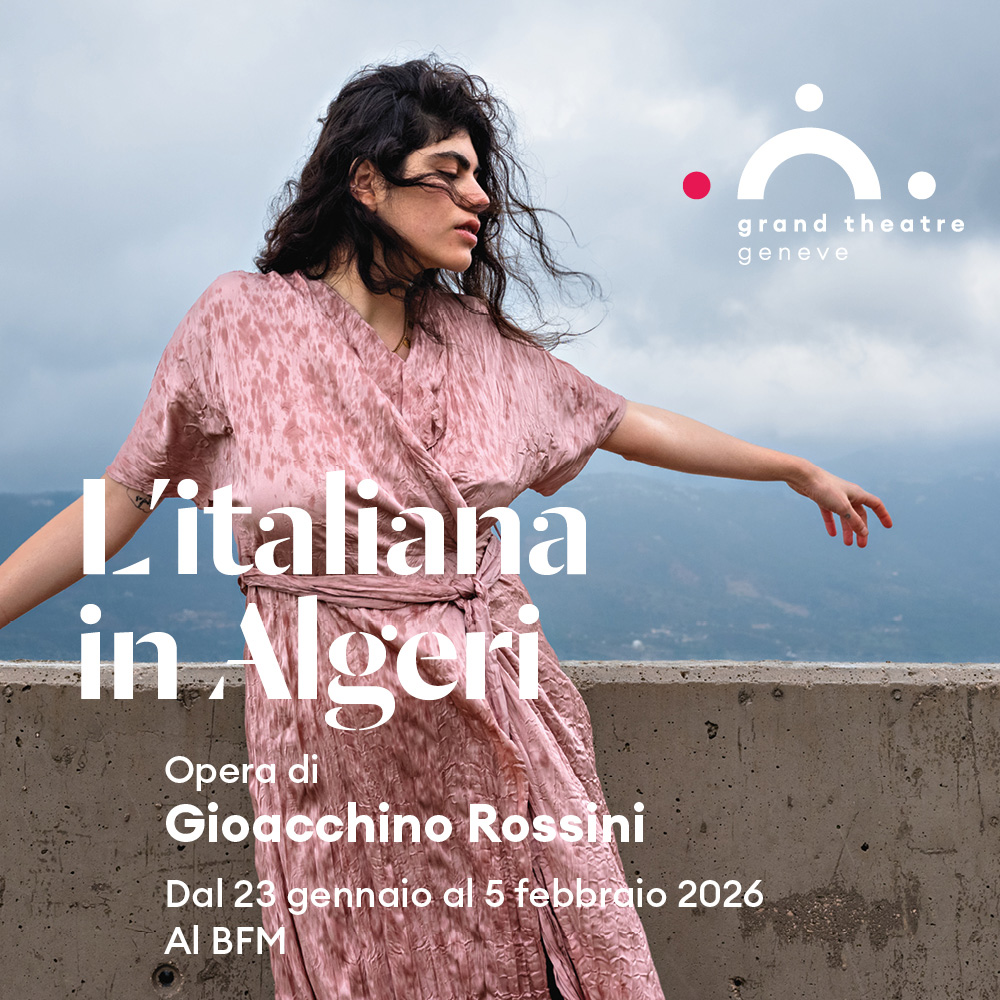


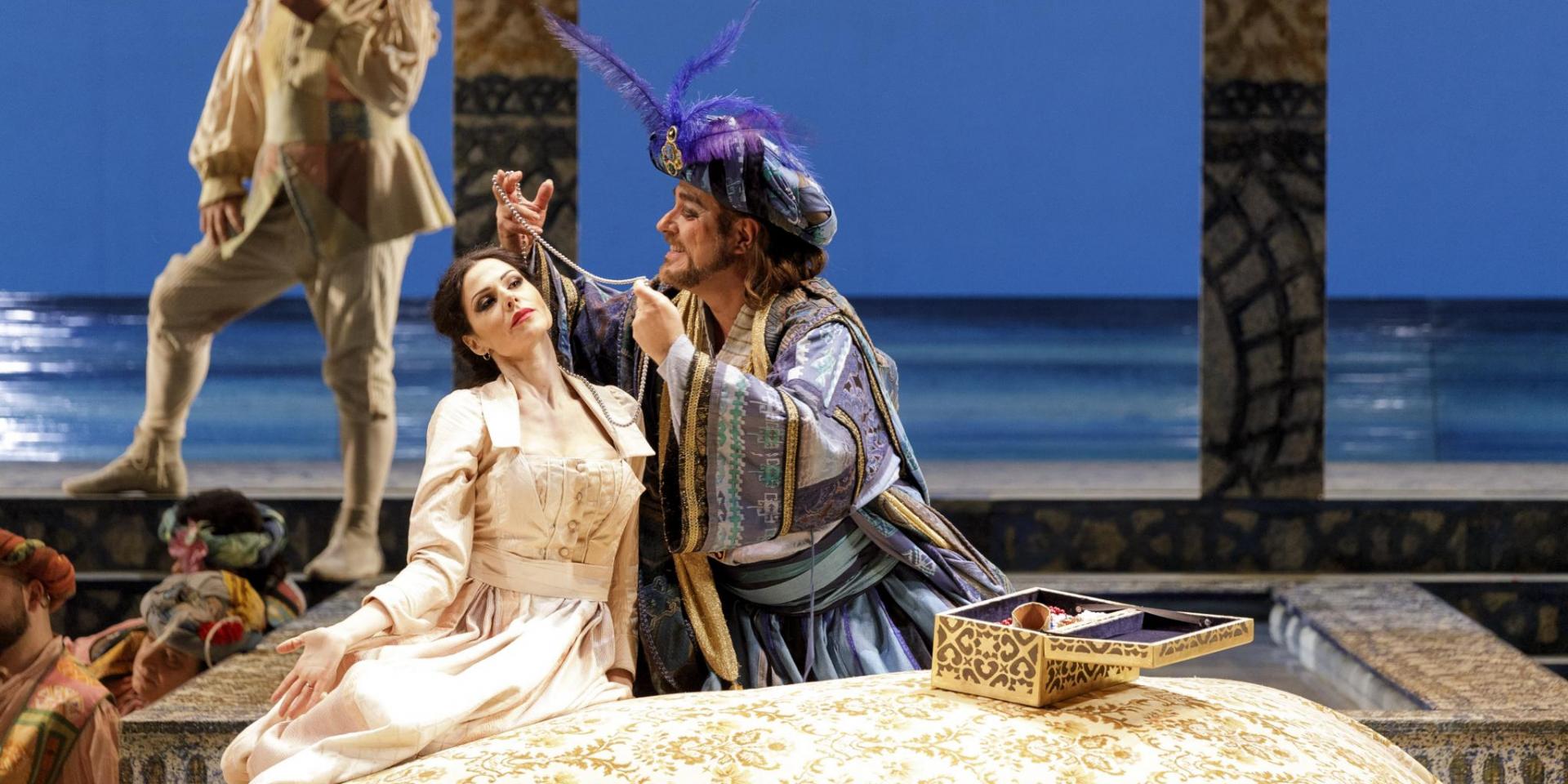


With Gioachino Rossini's L'italiana in Algeri, the Romandy director Julien Chavaz draws us into a Rossinian satire marked by the ingredients of the serious, the comic and fantasy. This staging inaugurates the temporary move of the Grand Théâtre to the Palais des Forces Motrices until spring 2027.
Director Julien Chavaz is no newcomer to the Geneva stage. He moved us in 2022 with Peter Eötvös's The Golden Dragon, presented by the Grand Théâtre at the Comédie de Genève, and last season with his French adaptation of Gerald Barry's Alice's Adventures Under Ground.
In this new staging, Chavaz takes hold of L'italiana in Algeri to portray the dynamics of a surreal reality, without losing the comic, critical and irreverent dimension that characterises Rossini's pages.
At the helm of the Magdeburg Theatre since 2022 and the recipient of several awards in Germany, the director will be joined by the young Michele Spotti, a specialist in the Italian bel canto repertoire, who will conduct the Orchestre de la Suisse Romande.

L'italiana in Algeri is a dramma giocoso in two acts by Gioachino Rossini, with a libretto by Angelo Anelli, first performed in Venice on 22.05.1813.
The plot tells the happy-ending story of Isabella, a young Italian woman captured by the corsairs of Bey Mustafà, who is eager to change wife. At the Bey's court Isabella meets her beloved Lindoro, in whose tracks she had set out on her journey. To carry out their escape plan and return to Italy, the two stage a fake ceremony that tickles Mustafà's vanity: distracting him from his main intent, they find their way home before the incredulous eyes of the Bey, who has no choice but to rediscover love in the arms of his wife Elvira.
Angelo Anelli's text, belonging to the opera buffa genre, had already been set to music in 1808 by Luigi Mosca and was loosely inspired by a real news event: the story of Antonietta Frapolli, a Milanese lady kidnapped by corsairs in 1805, taken to the harem of the Bey of Algiers Mustafà ibn Ibrahim and later returned to Italy. As was common practice at the time, a Rossini still only twenty-one years old took up the same libretto (with some changes entrusted to Gaetano Rossi) and composed the opera in great haste. For its perfect blend of the sentimental, the comic and the serious, the opera was described by Stendhal as "the perfection of the buffo genre".
The melodrama was first performed at the Teatro San Benedetto in Venice and was an immediate success. Rossini then conducted the opera in Vicenza in 1813, in Milan in 1814 (with further changes, including the insertion in the second act of a new cavatina for Lindoro, "Concedi, amor pietoso") and in Naples in 1815. The opera remained in the repertoire, in Europe and the United States, for almost the entire nineteenth century, even when the spread of Rossini's operas was already in marked decline.
The first twentieth-century revival dates back to the 1925 Turin edition, conducted by Vittorio Gui and performed by Conchita Supervia, which aroused the enthusiasm of Richard Strauss, and since then L'italiana in Algeri has remained, together with The Barber of Seville, La Cenerentola and, to a lesser extent, William Tell, one of Rossini's most performed operas in the repertoire of opera houses all over the world.
Tickets and information available at:
www.gtg.ch/saison-25-26/italienne-a-alger/